The best car head-up displays for road trips keep essential driving information in your line of sight, helping you check speed, navigation direction, and alerts without repeatedly looking down at the dashboard.
This roundup compares 10 options ranging from simple GPS speedometers to feature-rich OBD2 and smartphone-connected HUDs. Use the buying guide below to choose the right display for your vehicle, travel style, and budget.
Best 10 Car Head Up Displays for Road Trips Picks for 2026
Best OBD2 + GPS Gauge
Versatile Road-Trip Speed Monitor
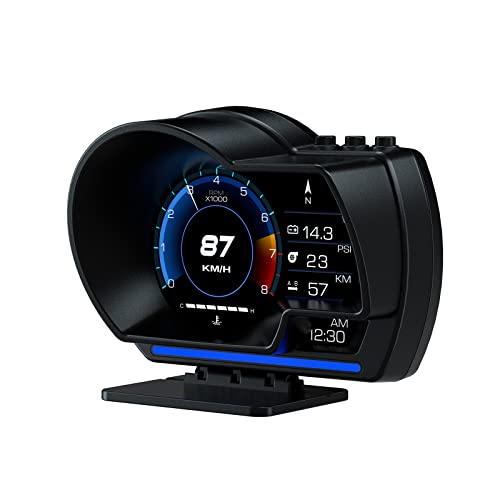
- OBD2 and GPS modes
- Multiple vehicle readings
- Adjustable dashboard or windshield mounting
Best For: Drivers wanting speed and vehicle data in one display
Best Minimalist GPS HUD
Simple Windshield Speed Display

- Clean speed-focused projection
- MPH/KM-H and compass display
- Overspeed and fatigue warnings
Best For: Drivers wanting a simple GPS speed readout
Best Connected HUD
Wireless CarPlay Road-Trip Display

- Wireless CarPlay and Android Auto
- HD anti-reflection screen
- Bluetooth audio and hands-free calling
Best For: Older vehicles needing portable smartphone connectivity
Best Large-Font GPS HUD

- Large MPH speed display
- Minimal windshield projection
- Automatic day/night brightness
Best For: Drivers wanting a simple, highly readable speed HUD
Best GPS Accuracy

- Dual GPS+BDS reception with 10 Hz refresh
- USB plug-and-play installation
- Adjustable brightness and overspeed alerts
Best For: Simple, accurate GPS speed display for road trips
Best Vehicle Data Coverage
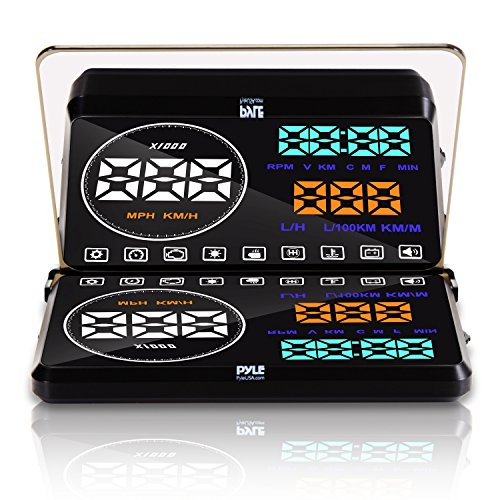
- Displays speed and multiple engine readings
- Includes several driving and vehicle alerts
- Plug-and-play OBDII/EUOBD installation
Best For: Drivers wanting vehicle diagnostics on road trips
Best Large-Screen Layout

- 5.5-inch borderless display
- Multiple trip-data interface combinations
- USB setup with rotating mounting bracket
Best For: Drivers wanting configurable trip information on a large screen
Best GPS Simplicity

- 10Hz GPS/BDS speed tracking
- USB plug-and-play setup
- Auto brightness with large display
Best For: Simple speed tracking across multiple vehicles
Best Connected Travel Hub

- CarPlay and Android Auto support
- OBD and cigarette-lighter power options
- Temperature-rated with overheat protection
Best For: Connected road trips and varied vehicle types
Best Vehicle Data

- Large HD speed display
- Shows multiple vehicle metrics
- Includes alerts and diagnostic functions
Best For: OBD2 vehicles needing speed and vehicle monitoring
Best OBD2 + GPS Gauge – Versatile Road-Trip Speed Monitor
For drivers comparing car head up displays for road trips, the wiiyii P6 stands out for combining OBD2 vehicle data with GPS speed tracking. Its adjustable mounting options, automatic brightness adjustment, and visible overspeed warning make it a practical choice for longer drives.
Best For: Drivers who want speed plus expanded vehicle information such as voltage, fuel consumption, RPM, and water temperature.
Pros:
- Uses OBD2 and GPS modes together for broader data coverage.
- Displays speed, vehicle data, fault codes, and overspeed alerts.
- Supports dashboard or windshield installation with an adjustable bracket.
- Automatically adjusts brightness and changes ambient lighting to red for overspeed warnings.
Cons:
- Its wider range of readings may be more information than some drivers need.
- OBD2 features depend on vehicle compatibility; unsupported vehicles use GPS functionality only.
- The unit is larger than a minimalist speed-only HUD.
The P6 is a strong fit for road trippers who want a multifunction gauge rather than a simple projected speed readout. Check your vehicle’s OBD2 compatibility if you want access to the full feature set.
Best Minimalist GPS HUD – Simple Windshield Speed Display
The M1 is a straightforward option for shoppers seeking car head up displays for road trips without a crowded screen. It projects speed, direction, and warnings onto the windshield, while GPS operation and USB power make setup simple across many vehicles.
Best For: Drivers who prefer a clean speed display with compass direction, overspeed alerts, and fatigue reminders.
Pros:
- Simple layout is designed to keep the projected information easy to read.
- Shows speed in MPH or KM/H and includes a GPS compass.
- Offers overspeed and continuous-driving fatigue warnings.
- Automatically adjusts brightness and includes a reflective film.
Cons:
- Speed is available only after the device acquires GPS satellites.
- Satellite acquisition can be slower in garages, dense buildings, under overpasses, or with metal window film.
- It does not provide OBD2 vehicle data.
The M1 favors clarity over a long list of readings, making it a sensible road-trip companion for drivers who mainly want speed and basic safety reminders. Allow time for GPS acquisition before relying on the display.
Best Connected HUD – Wireless CarPlay Road-Trip Display
For road trips that involve navigation, music, calls, and messages, the VIVIHUD V3-SE is a more capable alternative to basic car head up displays for road trips. Its HD screen supports wireless Apple CarPlay and Android Auto, with Bluetooth audio, screen mirroring, and a stable adjustable mount.
Best For: Drivers of older vehicles who want a portable smart display with smartphone navigation and hands-free functions.
Pros:
- Provides wireless Apple CarPlay and Android Auto access.
- Supports maps, music, calls, messages, voice assistants, and screen mirroring.
- HD anti-reflection technology is designed for daylight, tunnels, rain, and night driving.
- Works with cars, SUVs, pickups, vans, RVs, and vehicles without built-in CarPlay.
Cons:
- Requires a compatible smartphone for its connected features.
- Its broader interface is less minimalist than a speed-only GPS HUD.
- Installation still requires connecting the included power cord and pairing the phone.
The V3-SE is best viewed as a portable infotainment upgrade rather than merely a speed projector. It is particularly useful when your vehicle lacks factory CarPlay or Android Auto and you want navigation and audio features in one screen.
Best Large-Font GPS HUD – Compact Speed Projection
The M2 keeps the road-trip display focused on one job: showing speed in a large, readable format. Its plug-and-play GPS design, automatic brightness adjustment, and minimal windshield projection make it a good fit for drivers comparing uncomplicated car head up displays for road trips.
Best For: Drivers who want a compact, speed-only HUD with large lettering and minimal visual distraction.
Pros:
- Projects large speed lettering for quick viewing.
- Minimal display design is intended not to block the driver’s view.
- Automatic brightness adjustment helps keep the display clear by day and less glaring at night.
- Includes a Type-C USB cable, reflective film, and 3M sticker.
Cons:
- The supplied description specifies MPH speed display, limiting its displayed information.
- It requires GPS signal acquisition before showing speed.
- GPS performance may be affected in enclosed or obstructed locations.
The M2 is a sensible pick when readability and simplicity matter more than navigation or vehicle diagnostics. Its large-font presentation should appeal to drivers who want a quick speed check without a data-heavy interface.
Best GPS Accuracy – Compact Car HUD Speedometer
For drivers comparing car head up displays for road trips, this compact GPS unit focuses on readable speed tracking without requiring vehicle diagnostics. Its dual GPS+BDS reception, USB setup, adjustable brightness, and MPH/KM/H switching make it a practical choice for everyday navigation and long-distance driving.
Best For: Drivers who want a simple, accurate GPS speed display with overspeed alerts.
Pros:
- Dual-mode GPS+BDS positioning supports up to 32 satellite signals with a 10 Hz refresh rate.
- USB plug-and-play setup avoids complicated installation.
- Offers adjustable brightness, speed calibration, MPH/KM/H switching, and customizable overspeed alerts.
- Large, anti-reflective display is designed for easy daytime and nighttime viewing.
Cons:
- GPS reception may be affected in tunnels, underground garages, heavy rain or fog.
- It primarily displays GPS-based driving information rather than vehicle diagnostic data.
This is a streamlined option for road trips when speed visibility and straightforward installation matter most. The compact design and calibration feature add flexibility, while the lack of onboard diagnostic functions keeps the interface focused.
Best Vehicle Data Coverage – Pyle OBD2 HUD Monitor
Among car head up displays for road trips, the Pyle PHUD18OBD.5 stands out for showing more than speed. Its OBDII/EUOBD connection can provide vehicle information such as RPM, water temperature, voltage, fuel consumption, and diagnostic alerts, provided the vehicle meets the listed compatibility requirements.
Best For: Road-trippers who want speed plus real-time vehicle monitoring and warning information.
Pros:
- Displays speed, RPM, water temperature, voltage, fuel consumption, driving distance, and battery voltage.
- Includes overspeed, high-temperature, engine-failure, fatigue, and shift reminders.
- Plug-and-play package includes an OBDII/EUOBD cable, reflection film, and non-slip grip mat.
- Automatic light sensing and a multi-color display support daytime and nighttime visibility.
Cons:
- Compatibility is limited to listed vehicle ranges, including many North American and European cars after 2003 and Asian cars since 2007.
- OBD connection and diagnostic features may be more involved than a basic GPS speedometer.
This model is a strong fit when a trip display should double as a basic vehicle information monitor. Confirm your vehicle’s OBDII/EUOBD compatibility before buying, especially if you want access to the full range of readings and alerts.
Best Large-Screen Layout – G12 Multifunction GPS HUD
For shoppers seeking car head up displays for road trips, the G12 offers a larger 5.5-inch borderless screen and multiple information layouts. It uses GPS and Beidou positioning, connects through USB, and can show trip metrics such as speed, mileage, driving time, direction, coordinates, and alerts.
Best For: Drivers who prefer a large configurable display with trip and navigation-related data.
Pros:
- 5.5-inch borderless display provides multiple interface combinations.
- Shows speed, time, single-trip time, mileage, direction, latitude, longitude, and acceleration information.
- USB plug-and-play setup is designed to take about five seconds.
- 360-degree rotating bracket supports different mounting positions, including the center console.
Cons:
- The larger screen occupies more space than compact HUD speedometers.
- GPS-based data can be less dependable in areas where satellite reception is obstructed.
- Its supplied notes do not describe vehicle diagnostic or OBD functions.
The G12 is a practical choice for travelers who want more trip information than a basic speed display provides. Its flexible layouts and rotating mount help with placement, while the USB connection keeps installation simple.
Best GPS Simplicity – USB Car HUD
For drivers comparing car head up displays for road trips, this USB-powered GPS HUD offers a straightforward way to see speed without looking down. Its 10Hz GPS/BDS positioning, large display, and automatic brightness adjustment suit everyday highway travel, while installation requires no OBD connection.
Best For: Road trippers who want a simple, widely compatible GPS speed display.
Pros:
- USB plug-and-play power works with most cars, trucks, and motorcycles with a USB port.
- 10Hz GPS/BDS positioning connects with up to 32 satellites for responsive speed tracking.
- Automatic brightness adjustment and a large, anti-reflective font improve readability in varied lighting.
Cons:
- GPS accuracy can vary by about 0.6–1.8 MPH.
- Performance may be affected in tunnels, garages, heavy rain or fog, and vehicles with metallic windshield film.
- It primarily displays speed rather than broader vehicle diagnostics.
This is a practical pick when easy installation and clear GPS speed are more important than advanced vehicle data. The USB design also makes it a flexible choice for multiple vehicles.
Best Connected Travel Hub – CarPlay HUD
Among car head up displays for road trips, this model stands out for combining a HUD with phone connectivity, CarPlay, and Android Auto. It offers flexible power options, overspeed alerts, broad vehicle compatibility, and a temperature-rated design for extended driving in varied conditions.
Best For: Drivers who want a connected HUD with smartphone features and flexible installation.
Pros:
- Supports CarPlay and Android Auto, with Bluetooth and Wi-Fi pairing for phone connectivity.
- Includes both OBD and cigarette-lighter power options, with automatic shutdown and vibration-sensing wake-up through OBD.
- Works with sedans, trucks, SUVs, RVs, pickup trucks, modified vehicles, older models, and some vehicles without OBD connectivity.
- Designed for temperatures from -20°C to 75°C, with overheat protection and automatic cooling-fan operation.
Cons:
- Phone setup requires Bluetooth and Wi-Fi to remain enabled.
- OBD installation and the multiple connection options may take more configuration than a basic GPS display.
- The supplied notes do not specify the exact information shown on the projected display.
This is the most versatile choice of the group for connected road trips. Consider it if smartphone integration and broad compatibility matter as much as displaying driving information.
Best Vehicle Data – 5.5-Inch OBD HUD
For road trippers who want more than speed, this 5.5-inch OBD HUD displays driving and vehicle information in one view. It can show MPH or KMH, RPM, water temperature, voltage, and fuel consumption, while automatic brightness adjustment helps maintain visibility during daytime and nighttime travel.
Best For: OBD2-equipped vehicles and drivers who want trip monitoring plus basic diagnostics.
Pros:
- Large 5.5-inch HD screen shows speed and vehicle information clearly.
- Displays MPH/KMH, RPM, water temperature, voltage, and fuel consumption.
- Includes speeding and voltage alerts, failure detection, failure alarms, and failure-code clearing.
- Plug-and-play OBD2/EOBD setup is designed for many vehicles made after 2003.
Cons:
- Requires a compatible OBD2 or EOBD vehicle.
- Its broader feature set may be unnecessary for drivers who only want speed.
- Vehicle data availability can depend on the car’s supported protocols and information.
This model is a strong fit for owners who want a windshield display that also helps monitor vehicle condition. Its OBD connection provides more data than the simpler GPS-only alternative, but compatibility should be checked before purchase.
How We Picked the Best Car Head Up Displays for Road Trips
We focused on the features that matter most during long-distance driving: readable projected information, dependable speed data, simple installation, compatibility with different vehicles, and useful warning functions. The selection includes GPS-based models that work across more vehicles, OBD2 displays that can access vehicle data, and connected systems with CarPlay or Android Auto.
We also considered screen size, font clarity, power requirements, mounting practicality, and whether a device is likely to remain useful beyond a single trip. Because product specifications can vary by vehicle and listing, confirm compatibility and included accessories before ordering.
Quick Comparison
| Type | Best For | Main Advantage | Potential Limitation |
|---|---|---|---|
| GPS HUD | Broad vehicle compatibility | Usually works without OBD2 access | May show fewer vehicle metrics |
| OBD2 HUD | Speed and engine data | Direct connection to vehicle information | Requires a compatible OBD2 port |
| CarPlay or Android Auto HUD | Connected navigation and media | More smart-driving features | Requires phone pairing and setup |
| Large-screen projector | Maximum readability | Large numbers and prominent alerts | Can take up more windshield or dashboard space |
Key Buying Factors for Car Head-Up Displays for Road Trips
Speed Source and Vehicle Compatibility
GPS models calculate speed from satellite signals and are often the safest choice for older cars or vehicles without a convenient diagnostic connection. OBD2 models can provide more immediate speed readings and additional data, but you should verify that your vehicle uses a compatible port and supports the advertised functions.
Readability and Projection Quality
Choose a display with large, bright digits and adjustable brightness. Anti-glare performance matters in sunny conditions, while dimming or automatic brightness adjustment helps prevent distraction at night. The projected image should sit where you can read it without blocking important road views.
Navigation and Connectivity
If you mainly need speed, a basic GPS HUD may be sufficient. For turn guidance, calls, music, or app integration, consider a CarPlay- or Android Auto-compatible model. Wireless operation can reduce cable clutter, but it may require more setup and dependable phone connectivity.
Alerts, Installation, and Power
Overspeed alarms are useful on unfamiliar roads, but adjustable settings are preferable so alerts do not become annoying. Look for plug-and-play power, secure mounting, clear instructions, and a cable length that suits your dashboard. Test the unit before a trip to confirm the display position and settings.
Who Should Buy Which Car Head Up Displays for Road Trips?
- Choose a GPS speedometer HUD if you want broad compatibility and straightforward speed or direction information.
- Choose an OBD2 display if your vehicle is compatible and you want faster speed readings or extra diagnostic information.
- Choose a CarPlay or Android Auto HUD if navigation, phone integration, and media controls are central to your road-trip setup.
- Choose a large-font model if visibility is your top priority or you prefer quick-glance information from a greater distance.
- Choose a compact HUD if your dashboard or windshield has limited space and you want a less noticeable installation.
For the best result, prioritize clear visibility and dependable installation over the longest feature list. A simple display that stays readable and unobtrusive can be more useful on a long drive than a complex unit that requires frequent adjustment.