A head-up display can put speed and other driving information closer to your line of sight, helping you spend less time glancing down at the instrument panel. The best car head-up displays under $100 range from simple GPS speedometers to OBD-II units with extra vehicle data.
Our roundup focuses on affordable models with useful visibility features, straightforward installation, and compatibility options for different vehicles. Use the guide below to narrow the list by display style, power connection, readability, and the information you actually need.
Best 10 Car Head Up Displays Under 100 Picks for 2026
Feature-Rich OBD Pick
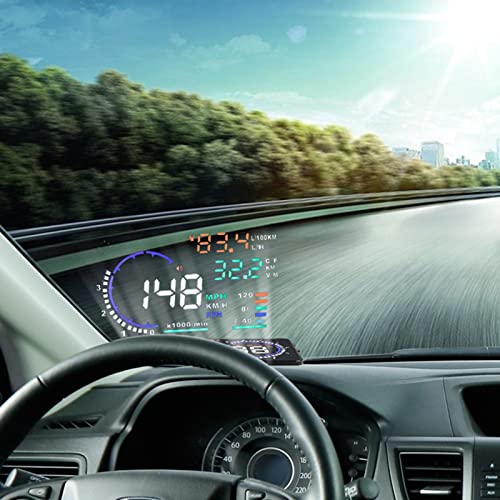
- Shows speed plus multiple engine and vehicle readings
- Includes several configurable driving alerts
- Automatic power with adjustable brightness
Best For: Compatible OBDII/EUOBD vehicles needing detailed vehicle data
Flexible Compatibility Pick

- Uses OBD or GPS mode for broader vehicle compatibility
- Displays speed, voltage, distance, and selected warnings
- Supports unit and brightness adjustments
Best For: Drivers who need an alternative to OBD-only operation
Multifunction GPS Pick

- Shows speed, time, travel data, and compass direction
- Adds overspeed and fatigue-driving alerts
- USB setup with automatic power operation
Best For: Drivers wanting extra trip information from a GPS HUD
Best OBD-II Value
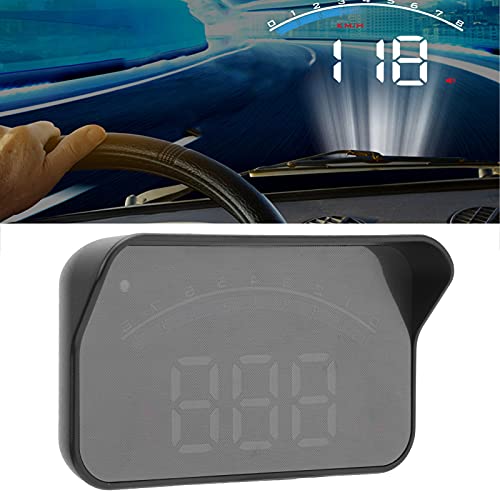
- Displays speed, RPM, voltage, temperature, and faults
- Plug-and-play OBD connection
- Multiple alerts and adjustable brightness
Best For: Drivers with compatible OBD-II vehicles wanting broad data coverage
Best Large-Screen OBD HUD
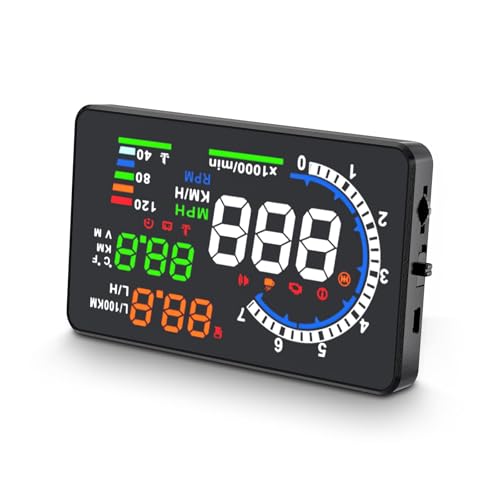
- Large 5.5-inch HD display
- Shows driving and diagnostic data
- Supports OBDII and EOBD vehicles
Best For: Drivers who want a highly readable, information-rich OBD display
Best No-OBD GPS Option

- USB-powered with no OBD connection required
- GPS and BDS positioning with 10Hz refresh
- Automatic brightness and large speed display
Best For: Drivers wanting a simple speed display for cars, trucks, or motorcycles
Best Feature-Rich HUD

- Large MPH digits with a 10Hz refresh rate
- Automatic brightness and anti-reflective shade
- USB setup without OBD connection or wiring changes
Best For: Commuters and highway drivers wanting a clear, responsive HUD
Best Large-Font HUD

- Large HD numbers with a 199 MPH maximum display
- GPS and BeiDou dual-chip positioning
- USB plug-and-play setup with automatic dimming
Best For: Drivers who prioritize a prominent, easy-to-read speed display
Feature-Rich OBD Pick – Multi-Color 5.5-Inch HUD
For drivers comparing car head up displays under 100, this OBDII/EUOBD model stands out for its broad dashboard-data coverage. It projects speed and several vehicle readings onto the windshield, with adjustable brightness and automatic power operation.
Best For: Drivers with a compatible OBDII or EUOBD vehicle who want more than speed information.
Pros:
- Displays speed, engine RPM, water temperature, battery voltage, fuel-consumption data, mileage, and fault codes.
- Offers manual and automatic brightness adjustment with technology intended to reduce reflections.
- Includes overspeed, fatigue-driving, high-temperature, low-voltage, and shift reminders.
- Turns on and off automatically with the vehicle.
Cons:
- Requires a compatible OBDII or EUOBD vehicle.
- The supplied listing does not specify GPS operation for vehicles without a compatible diagnostic port.
This is a strong choice when vehicle diagnostics and alerts matter as much as windshield speed display. Check your vehicle’s OBD compatibility before buying.
Flexible Compatibility Pick – M7 OBD/GPS Car HUD
Among car head up displays under 100, the M7 is appealing for its dual OBD/GPS design. OBD mode provides the broadest set of readings, while GPS mode gives owners of unsupported vehicles an alternative speed-display option.
Best For: Drivers who want a plug-and-play HUD with both OBD and GPS operating modes.
Pros:
- OBD mode displays speed, water temperature, voltage, and driving distance.
- GPS mode is listed as suitable for all vehicles, including those incompatible with OBD mode.
- Supports MPH or KM/H, adjustable temperature units, brightness adjustment, and multiple alarms.
- Simple plug-and-play installation with no stated vehicle damage.
Cons:
- OBD mode is not compatible with electric vehicles, diesel vehicles, pickups, RVs, or computer-modified vehicles according to the listing.
- GPS mode provides fewer vehicle readings than OBD mode.
The M7 offers useful flexibility, but buyers should select the operating mode based on their vehicle type. Its dual-system approach is particularly practical when OBD compatibility is uncertain.
Simple GPS Speed Pick – K4 Large-Display HUD
This K4 is a straightforward option for shoppers seeking car head up displays under 100 with easy USB setup. Its GPS and BDS positioning system focuses on a large, readable speed display, while brightness, unit, and calibration controls help tailor the readout.
Best For: Drivers who primarily want a large GPS speed readout with minimal installation.
Pros:
- Uses dual-mode GPS and BDS with a stated 10Hz refresh rate and support for up to 32 satellites.
- USB plug-and-play power makes installation quick.
- Switches between MPH and KM/H and includes manual speed calibration.
- Provides adjustable brightness and a customizable overspeed alert.
Cons:
- GPS reception may be affected in tunnels, underground garages, heavy rain or fog, and vehicles with metallic windshield film.
- Its listed functions focus primarily on speed rather than detailed engine diagnostics.
Choose this model if a clean, large-font GPS speed display is the priority. Its positioning-based operation avoids dependence on an OBD connection, but signal conditions can affect availability.
Multifunction GPS Pick – M22 Color Windshield HUD
The M22 adds several convenience features to the typical GPS speedometer, making it a notable contender among car head up displays under 100. Along with speed, it shows time, travel information, and compass direction, with automatic power and adjustable display settings.
Best For: Drivers who want a GPS HUD with time, trip data, compass information, and fatigue reminders.
Pros:
- Displays speed, clock, travel time, distance traveled, and GPS compass direction.
- Supports MPH and KM/H, speed calibration, and adjustable brightness.
- Includes overspeed and fatigue-driving alerts.
- USB plug-and-play installation with automatic startup and shutdown.
Cons:
- Speed appears only after the unit acquires GPS satellites.
- Garages, overpasses, dense buildings, metal windshield film, and nearby GPS devices can slow satellite acquisition.
- The supplied notes mention possible daytime reflection and the need for brightness adjustment or reflective film.
The M22 is a good fit for buyers who want more trip-oriented information than a basic speed display. Expect some startup or visibility limitations in challenging GPS and lighting conditions.
Best OBD-II Value – M6S Universal Car HUD
If you want car head up displays under 100 with broad driving-data coverage, the M6S is a practical OBD-II option. It projects speed and other vehicle information onto the windshield and adds configurable alerts for several driving conditions.
Best For: Drivers of compatible OBD-II vehicles who want speed, engine RPM, voltage, water temperature, and fault information in one display.
Pros:
- Displays speed, RPM, voltage, water temperature, and fault information.
- Plug-and-play connection through the vehicle’s OBD cable.
- Includes speed, voltage, water-temperature, fatigue-driving, and fault alerts.
- Automatic and manual brightness adjustment helps improve visibility.
Cons:
- Compatibility is limited to suitable OBD-II vehicles and requires checking the manual.
- Notes indicate it is not compatible with hybrid, diesel, pickup, sedan, or computer-modified vehicles.
The M6S offers a feature-heavy package at a budget-friendly level, but compatibility should be confirmed before purchase. Its OBD connection makes installation straightforward when your vehicle is supported.
Best Large-Screen OBD HUD – wiiyii A8 5.5-Inch HUD
Among car head up displays under 100, the wiiyii A8 stands out for its large 5.5-inch HD screen and extensive vehicle-data readouts. It is designed for compatible OBDII and EOBD vehicles and can show both driving information and diagnostic details.
Best For: Drivers who prioritize a large display with speed, water temperature, voltage, trip distance, alarms, and basic fault-reading functions.
Pros:
- Large 5.5-inch HD display is designed for easier information viewing.
- Shows speed, water temperature, voltage, distance, and other vehicle data.
- Supports kilometer/mile switching and speeding and voltage alarms.
- Can read, alert, and clear vehicle fault information according to the supplied notes.
Cons:
- Only supports OBDII and EOBD vehicles, not OBD I or JOBD.
- Its larger screen may take more dashboard or windshield space than smaller HUDs.
The A8 is a strong choice if readability and information density matter more than a compact footprint. Verify your vehicle’s diagnostic standard before ordering to avoid compatibility problems.
Best No-OBD GPS Option – K1 GPS Speed HUD
For shoppers comparing car head up displays under 100, the K1 offers a simpler installation path because it uses USB power rather than an OBD connection. Its GPS-based system projects speed, adjusts brightness automatically, and works with most cars, trucks, and motorcycles that have a USB port.
Best For: Drivers who want a broadly compatible speed display without connecting to the vehicle’s OBD port.
Pros:
- USB-powered plug-and-play setup does not require an OBD port.
- GPS and BDS positioning with a stated 10Hz refresh rate.
- Large speed characters and anti-reflective shading support easy reading.
- Automatic brightness adjustment helps accommodate daytime and nighttime driving.
Cons:
- Displays speed rather than the broader vehicle data offered by OBD-based models.
- GPS speed can have a stated deviation of 0.6–1.8 MPH.
- Signal performance may be affected in tunnels, underground garages, heavy rain or fog, and behind metallic windshield film.
The K1 is a sensible pick for mixed-vehicle households or anyone avoiding OBD compatibility checks. Its GPS dependence is the main trade-off, especially where satellite reception is limited.
Best Compact GPS HUD – Dual-Satellite Speed Display
For drivers comparing car head up displays under 100, this compact GPS speedometer offers a straightforward way to view speed near your line of sight. It uses GPS and BeiDou positioning, USB power, and automatic day-and-night brightness adjustment.
Best For: Drivers who want a small, easy-to-install HUD for everyday speed checks in a sedan, SUV, or truck.
Pros:
- Projects speed onto the windshield to reduce dashboard glances.
- GPS and BeiDou dual-satellite positioning provide near-real-time speed updates.
- Automatic brightness changes from daytime green illumination to softer nighttime lighting.
- Compact ABS housing and USB plug-and-play setup require minimal installation.
Cons:
- Its three-month warranty is shorter than some competing options.
- Speed information depends on satellite positioning rather than the vehicle’s built-in gauge.
With its tiny footprint and included projection film, scraper, and adhesives, this model is a practical pick when you want a simple windshield speed display without a permanent wiring installation.
Best Feature-Rich HUD – Smart GPS Co-Pilot
Among car head up displays under 100, this smart in-car HUD stands out for its large MPH readout, 10Hz refresh rate, and automatic brightness sensor. It connects to a standard 5V USB source without using the vehicle’s OBD port.
Best For: Commuters and long-distance drivers who want a large, quick-to-read MPH display with a longer manufacturer warranty.
Pros:
- Large digits display speeds up to 115 MPH for quick forward-view reading.
- GPS and BDS dual-mode positioning supports up to 32 satellites and a 10Hz refresh rate.
- USB plug-and-play installation avoids OBD connections and wiring modifications.
- Automatic brightness and an anti-reflective shade support daytime and nighttime viewing.
Cons:
- GPS variation of approximately 0.6–1.8 MPH can occur.
- Satellite reception may be limited indoors, in tunnels, underground garages, or behind metallic windshield film.
- The display is limited to 115 MPH.
The two-year warranty and flexible vehicle compatibility add appeal, while the clear caveats about GPS reception make it best suited to open-road use rather than enclosed parking areas or tunnels.
Best Large-Font HUD – Adjustable GPS Speedometer
This large-font option is a strong contender among car head up displays under 100 for drivers who prioritize a prominent speed readout. Its GPS and BeiDou dual-chip positioning, USB installation, and automatic brightness adjustment make it easy to use across many vehicles.
Best For: Drivers who prefer large speed numbers and need a compact HUD that can display speeds up to 199 MPH.
Pros:
- HD large-font display supports speed readings up to 199 MPH.
- GPS and BDS dual positioning is designed for quick updates with few errors.
- Automatic nighttime dimming helps reduce distracting brightness.
- Compact ABS design includes a light shield, projection sticker, scraper, and adhesive pads.
Cons:
- GPS performance can be affected in tunnels, underground garages, and other weak-signal areas.
- The listed features focus on speed display rather than additional vehicle information.
Its high speed range and large digits make this a sensible choice for drivers who want visibility first, while the compact body keeps dashboard placement unobtrusive.
How We Picked the Best Car Head Up Displays Under 100
We evaluated these HUDs by looking at the features that matter most in daily driving: speed accuracy, display readability, installation method, vehicle compatibility, and useful alerts. We also considered whether a unit uses GPS or an OBD-II/EUOBD connection, since that choice affects setup and the type of information shown.
Models with adjustable brightness, large numerals, multi-color displays, or day-and-night visibility received additional consideration. Because product specifications and vehicle compatibility can vary, check the current listing and your vehicle’s port type before ordering.
Quick Comparison
| HUD type | Best for | Typical strengths | Things to check |
|---|---|---|---|
| GPS | Simple installation | Broad vehicle compatibility and speed display | Satellite signal and possible startup delay |
| OBD-II/EUOBD | Vehicle data and alerts | Direct connection and access to engine information | Port compatibility and supported functions |
| Windshield projector | At-a-glance viewing | Projected or reflected information near eye level | Reflection quality in bright sunlight |
| USB plug-and-play | Convenient power | Easy setup in cars with an available USB port | May provide fewer vehicle metrics |
Key Buying Factors for Car Head-Up Displays Under $100
Connection and Compatibility
GPS units are usually the safest choice when you want a broadly compatible speed display without accessing vehicle data. OBD-II models can show information such as engine RPM or fault-related data, but they require a compatible diagnostic port and may not support every feature in every car.
Readability and Brightness
Look for large fonts, adjustable brightness, and day-and-night modes if you drive in changing light. A color display can improve visual separation, while a simple white display may be easier to read without unnecessary distraction. Windshield reflections also depend on the glass, dashboard angle, and included reflective film.
Information and Alerts
Decide whether you only need current speed or also want overspeed warnings, RPM, mileage, or other vehicle readings. More data is not always better; a less crowded display may be safer for drivers who want minimal visual interruption.
Installation and Power
USB-powered models are generally easy to move between vehicles, while OBD-II units typically offer a tidier one-cable setup. Route cables away from pedals and controls, place the display where it does not block road visibility, and follow local windshield regulations.
Who Should Buy Which Car Head Up Displays Under 100?
- Choose a GPS HUD if you want the simplest option for an older, newer, or mixed vehicle fleet.
- Choose an OBD-II model if your vehicle is compatible and you want engine-related information in addition to speed.
- Choose a large-font or adjustable-brightness display if visibility is your top priority, especially for frequent nighttime or daytime driving.
- Choose a compact USB model if you want easy installation, portability, and minimal setup.
- Choose an overspeed-alert model if you value a reminder to monitor speed, but treat the alert as an aid rather than a replacement for attentive driving.
For most shoppers, the best value comes from matching the connection type to the vehicle first, then prioritizing readability and only the data you genuinely need.